
Tata Motors on Friday reported a 62.2 per cent decline in consolidated net profit to Rs 4,003 crore in the June quarter, impacted by volume decline across segments, drop in JLR profits due to US tariffs and high base effect due to gain from sale of discontinued operations. The auto major had posted a consolidated net profit of Rs 10,587 crore in the April-June quarter of the previous fiscal, Tata Motors Ltd (TML) said in a regulatory filing.

"There is a sharp jump that we have seen in bookings of EVs... The jump, at least in our case, in just two months, it is about 2 to 2.5 times of what it used to be"

JSW MG Motor India has unveiled ADAPT, India's first multi-powertrain new energy vehicle (NEV) platform, designed to support electric, hybrid, plug-in hybrid, and range-extender electric vehicles. The company plans to launch one electric SUV and one plug-in hybrid SUV based on this architecture during FY27, aiming to broaden its NEV portfolio and accelerate adoption in India.

Indian benchmark indices Sensex and Nifty rallied in early trade, driven by a significant decline in crude oil prices and positive developments on the geopolitical front, alongside strong performance in blue-chip IT stocks. Track Sensex, Nifty on July 2, 2026

The Delhi government has approved the Delhi EV Policy 2.0, which will phase out fresh registrations of internal combustion engine (ICE) two-wheelers and three-wheelers over the next two years, starting with a ban on ICE 3Ws and N1 category LCVs from January 1, 2027, and ICE 2Ws from April 1, 2028.
Indian stock market benchmark indices Sensex and Nifty closed nearly one per cent higher, extending their winning streak for a second day. This rally was driven by softening crude oil prices, positive geopolitical developments, and significant buying in blue-chip IT stocks, despite a broader global tech sell-off.

Tata Motors on Friday said it will cut passenger vehicle prices ranging between Rs 65,000 and Rs 1.45 lakh effective September 22 to pass on the full benefit of GST reduction to customers. The Mumbai-based auto major said that its small car Tiago will see a price drop of Rs 75,000, Tigor Rs 80,000, and Altroz Rs 1.10 lakh.
Tata Motors on Thursday said it has filed 250 patents and 148 design applications, its highest-ever in a single year, in FY25. The filings encompass a broad spectrum of product and process innovations, aligning with key automotive megatrends such as Connectivity, Electrification, Sustainability, and Safety (CESS), as well as emerging technologies like hydrogen-based vehicles and fuel cells, the Mumbai-based auto major said in a statement.

'The reported deal between the European Union and China should mitigate it (shortage) for the medium to long term. Let's wait and watch how this plays out.'

Indian companies are increasingly opting for demergers, with 29 deals valued at over $40 billion in 2025 alone, marking a 10-year high, as promoters and boards recognise that markets favour focused businesses over complex conglomerates.

'With inflationary pressures now at elevated levels and the adverse cost environment persisting, the company has to pass on a portion of the increased costs to the market, while continuing to ensure that the impact on customers is kept to the minimum extent possible.'

Electric passenger vehicle (PV) retail sales jumped more than twofold in September with Tata Motors (TaMo) leading the pack having over 6,000 registrations and a 40 per cent market share.
West Bengal BJP president Samik Bhattacharya has expressed the state government's desire for the Tata Group to return to Singur, viewing it as an economic necessity and a signal that West Bengal is open for business. The move aims to reverse the negative perception created when the Nano project was forced out of the state.

Indian carmakers, including Maruti Suzuki and Kia India, reported robust sales growth in May 2026, with both companies achieving their highest-ever monthly sales despite rising fuel prices. Maruti Suzuki's domestic sales surged to 1,93,535 units, while Kia India recorded 27,586 units, driven by strong demand in mini and compact segments and a shift towards electric and CNG vehicles.

As industrial plants boost the village's profile, locals demand priority hiring, alongside better storage facilities and water security.

India's leading passenger vehicle manufacturers are significantly increasing investments and factory capacities, alongside planning major product launches for FY27, driven by strong confidence in sustained domestic demand growth despite global geopolitical tensions and supply chain risks.

Maruti Suzuki India and Tata Motors on Monday announced plans to increase vehicle prices from April, the second time in this year, in order to partially offset the impact of rising input costs. Maruti Suzuki said it plans to hike prices of its entire model range by up to 4 per cent from next month.
Spreading risks in sourcing raw materials for electric vehicle (EV) manufacturing is "very critical" and the government can play a key role by enabling access to these from multiple locations worldwide, said Vivek Srivatsa, chief commercial officer at Tata Passenger Electric Mobility, on Friday while stressing the need for faster localisation, especially of batteries.
Tata Motors is hoping to beat its target year of 2030 and have 30 per cent of its portfolio comprising electric vehicles (EVs), according to Chairman N Chandrasekaran, who was speaking at the company's last annual general meeting (AGM) ahead if its demerger.
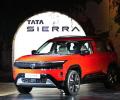
Tata Motors Passenger Vehicles Ltd expects contribution of SUVs to its overall sales to go beyond 70 per cent with it making foray into the fast growing mid-sized segment with a premium positioning of its Sierra model, according to its Managing Director & CEO, Shailesh Chandra.

Years after the Nano exit, Singur's farmers now seek industry and jobs, as the land remains caught between failed promises and political contest.

The Harrier EV is the first mainstream EV in India to offer a dual-motor, all-wheel-drive (AWD) which the company has termed as QWD, The Quad Wheel Drive, reports Rajesh Karkera.

Why is Shailesh Chandra, managing director of Tata Motors Passenger Vehicles and Tata Passenger Electric Mobility, not worried about the competition?

JSW Motors, part of the JSW group, is set to enter India's passenger vehicle market with plans to launch 15 new-energy vehicles (NEVs) over the next four years, with deliveries commencing from December 2026.
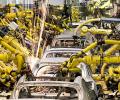
Passenger vehicle sales in India reached a record high of 4.7 million units in FY26, boosted by strong performances from major automakers and the implementation of GST 2.0.

India's outward foreign direct investment (FDI) saw a significant increase of 27.5 per cent, reaching $7.06 billion in March, primarily driven by a sharp rise in guarantees for overseas units, according to the Reserve Bank of India.

Tata Motors on Wednesday reported a 22 per cent fall in consolidated net profit to Rs 5,578 crore for the third quarter ended December 2024, impacted by s decline in revenue from its passenger and commercial vehicles divisions. The company had posted a consolidated net profit of Rs 7,145 crore in the same quarter last fiscal, Tata Motors said in a regulatory filing.

Tata Motors and Mahindra & Mahindra have cut the prices of their SUV models to boost demand. Tata Motors has revised the starting prices of its flagship SUVs, the Harrier (Rs 14.99 lakh) and the Safari (Rs 15.49 lakh) and extended benefits of up to Rs 1.4 lakh on other popular SUV variants.

Fuel prices have risen by about Rs 7.5 per litre since May 15, as global crude oil prices surged due to the ongoing conflict in West Asia and supply concerns around the Strait of Hormuz.
A pickup in freight rates, rising fleet utilisation and a long-awaited replacement cycle are breathing fresh life into India's commercial vehicle (CV) market, strengthening the investment case for Tata Motors' CV arm (TMCV). Despite a broadly steady December quarter (Q3) performance, brokerages remain divided on whether the upswing is strong enough to offset margin pressures.

India's rapidly ageing truck fleet, with 42% of vehicles over 12 years old, is set to trigger a replacement-driven growth of 3-5% annually over the next five years.

Tata Motors on Monday announced the demerger of its commercial and passenger vehicle segments into two separate listed entities to better capitalise on growth opportunities. The commercial vehicles business and its related investments would be housed in one entity while the passenger vehicle business, including electric vehicles, Jaguar Land Rover (JLR) and its related investments, would be part of the second entity, the auto major said in a regulatory filing. Tata Motors chairman N Chandrasekaran said that Tata Motors has scripted a strong turnaround in the last few years.
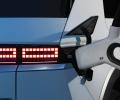
Under FAME-II, automakers provided subsidies to electric vehicle (EV) customers at the time of purchase, with the understanding that the government would reimburse the firms later.

Indian carmakers experienced a robust start to the new fiscal year, with an estimated 4.5 lakh passenger vehicles sold in April, marking a 27 per cent increase year-on-year, attributed to factors like GST 2.0, repo rate cuts, and income tax benefits.
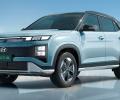
Long standing number two passenger vehicle maker in India, Hyundai Motor India, has slipped to fourth position in the domestic market in terms of retail sales last month behind Maruti Suzuki India, Mahindra & Mahindra and Tata Motors, as per the latest data shared by dealer's body FADA. Hyundai Motor India clocked retail sales of 38,156 units last month, a dip of 20 per cent as compared with 47,540 units in February last year.

Companies are already diversifying sourcing, raising prices, and reworking operating models as the disruption drags on.

India's electric passenger vehicle market saw an 87.4 per cent year-on-year increase in FY26, reaching 233,246 units, primarily driven by the mid-size SUV segment (20-30 lakh price bracket), while the entry-level segment (sub-10 lakh) experienced a decline.

Want to know why Pratap Bose, Chief Creative and Design Officer at Mahindra Global Design thinks so?

Tata Sons' unlisted ventures, including Air India, Tata Digital, and Tata Electronics, reported combined net losses of approximately 25,568.8 crore in FY25, a 58.3 per cent increase from the previous year, despite Tata Sons itself remaining profitable for over a decade.
Tata Motors is likely to exit the S&P BSE Sensex and the Nifty50 indices once the demerger process of its commercial vehicle (CV) and passenger vehicle (PV) businesses is complete, analysts at Nuvama Institutional Equities said. They have compared the development with Reliance Industries (RIL) and Jio Financial Services, which got listed separately and eventually (in the next few days) got excluded from the domestic indices.
